
Start with the notes inside the chord
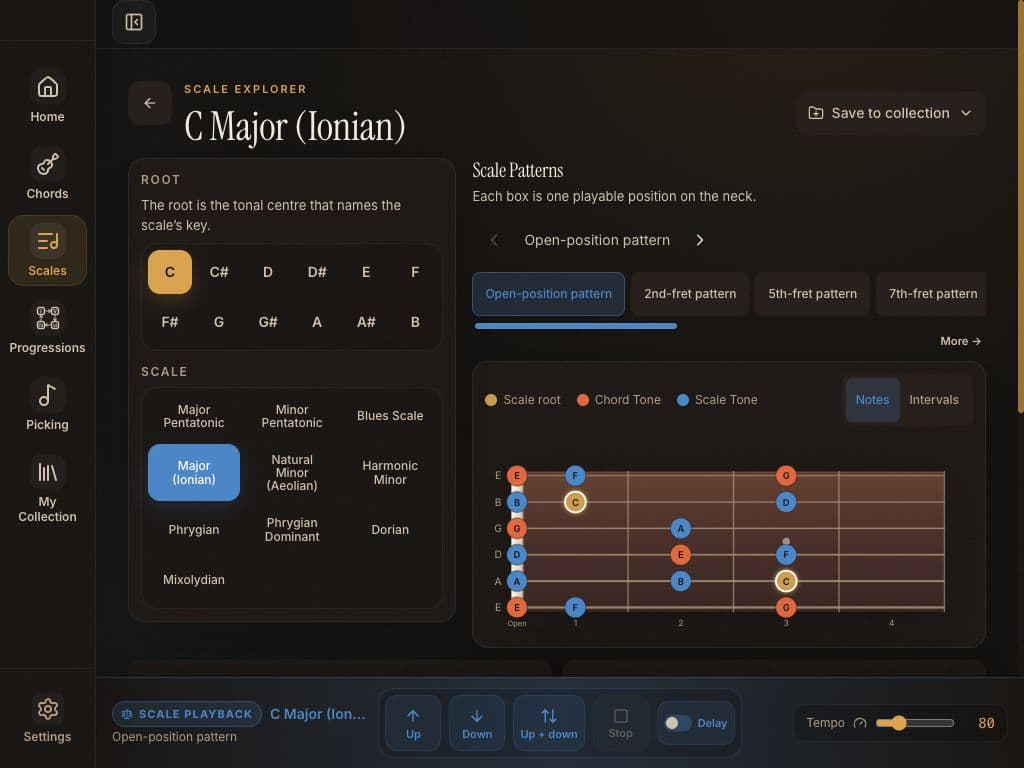
A C major chord contains C, E and G. The C major scale contains C, D, E, F, G, A and B. All three chord notes are in the scale. They are useful resting places when you make a short melody over a C chord.
Play an open C major chord in standard tuning. From the low E string to the high E string, the frets are x–3–2–0–1–0; x means leave that string out. Strum slowly from the A string and listen to the whole sound.
C major scale · Chord notes highlighted
Find one octave nearby
Play these eight notes one at a time. This route stays near your open C shape. String 1 is the thin, high E string; string 6 is the thick, low E string. An open string has no finger on a fret.
| Note | String | Fret |
|---|---|---|
| C | 5 · A | 3 |
| D | 4 · D | Open |
| E | 4 · D | 2 |
| F | 4 · D | 3 |
| G | 3 · G | Open |
| A | 3 · G | 2 |
| B | 2 · B | Open |
| C | 2 · B | 1 |
Turn the pattern into a phrase
- Strum C major once. Let it ring, then play the scale up and down slowly.
- Play C–D–E and pause on E. Strum the C chord again and hear how E fits.
- Play G–F–E and pause on E. Notice that F adds movement before you come home to a chord note.
- Make your own three-note phrase. Finish on C, E or G and leave a short silence before repeating.
The aim is to hear a relationship, not to get through the scale quickly. Try finishing the same phrase on D or F next. The sense of movement may be different; listen before choosing your favourite ending.
Explore it in Fretweave
Use Chord Explorer to hear C major, then Scale Explorer to find the matching C major scale and its chord context. Core major chords and the C major scale are part of the free tools, with two positions to explore.
When that feels familiar, try the same idea over a C–F–G progression.
Fretweave is coming soon to iPad.
See the app in action